Building a 0-1 social trust platform for India
Taking enterprise-grade background verification and making it usable for first-time consumers making high-stakes personal decisions in under 5 minutes.
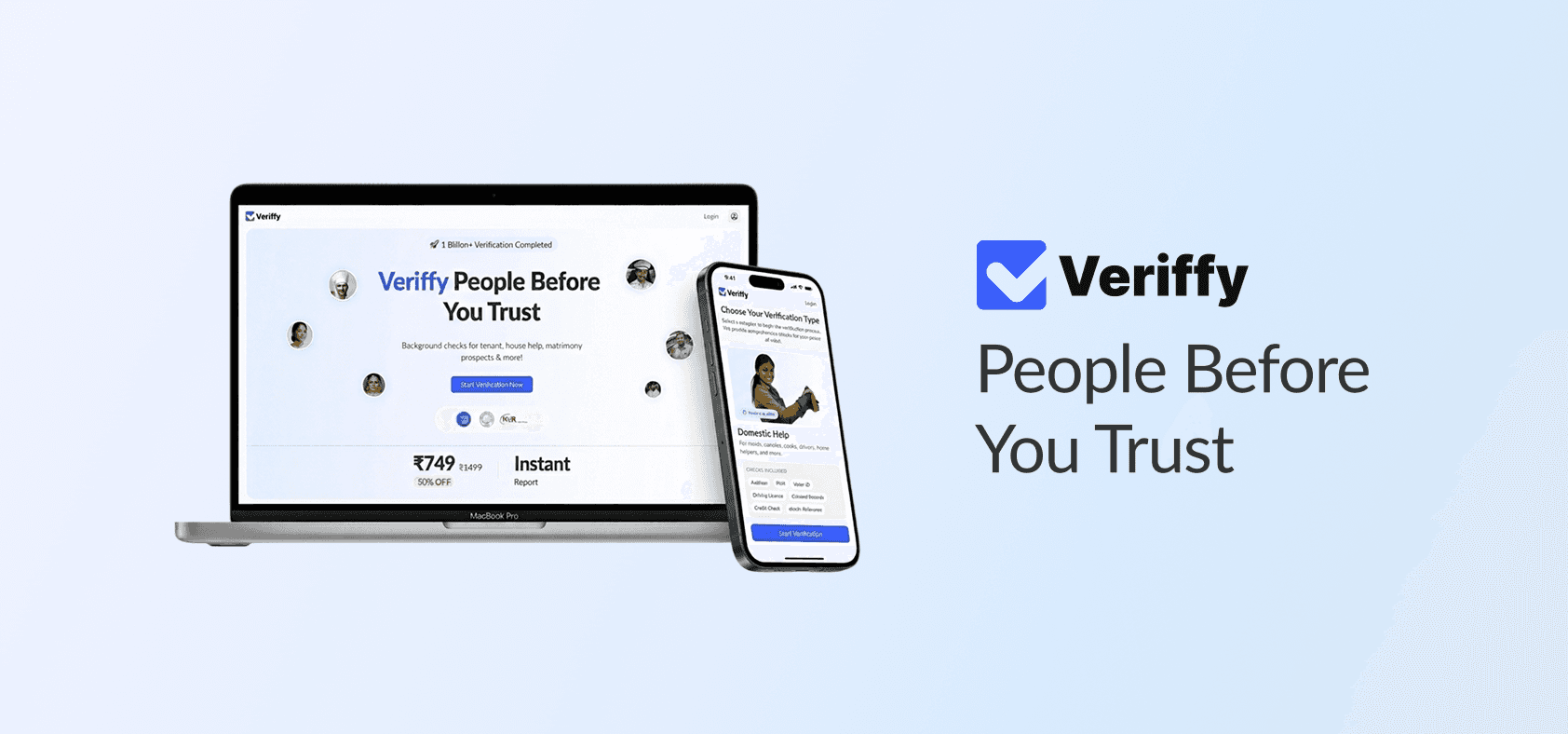
Product
Veriffy by OnGrid
Role
Lead Designer
Team
2 Designers
1 Product Manager
Stage
0 → 1 MVP
₹13KCr
Estimated TAM in domestic help, tenant, matrimonial verification annually.
₹2000+
Enterprises on OnGrid's B2B backend
30+
Screens designed across 5 flows, mobile and desktop breakpoints
100%
Automated journey: input to consent to payment to report delivery
Overview
The problem wasn’t technology. It was trust.
OnGrid had already built India's most reliable verification infrastructure trusted by 4,000+ enterprises for 150+ verifications.
Millions of Indian households make critical decisions daily, hiring a maid, renting a home, and considering a marriage proposal.
But:
Verification tools existed only for enterprises
Consumers relied on informal referrals or gut feelings.
The act of “checking someone” felt awkward, even wrong
Reality:
People didn’t avoid verification because it was hard they avoided it because it felt uncomfortable and unfamiliar.
Why this mattered:
This isn’t a feature gap. It’s a behaviour + perception problem
My Role:
I led the end to end UX for this product from 0 to 1. I owned the overall flow, UX decisions, and system thinking.This included defining UX principles, designing the full journey, building the design system, and creating interactive prototypes.I worked closely with the product manager on scope and decisions, and collaborated with another designer on visual execution and components.I also worked with developers during handoff to ensure consistency across OCR states, validation and edge cases.
What we learned early
Before designing anything, we spoke to users across different contexts like landlords, families and small business owners.
Most people were not against verification. The hesitation was emotional. It felt intrusive, unnecessary, or something only companies do.
The default behavior was informal trust. People relied on referrals from neighbors or known contacts instead of actual verification.
There was also low awareness. Many users did not know this kind of verification was even available to them.
Privacy was the biggest concern. Users were unsure if this was legal, safe and how the other person’s data would be handled.
These insights shaped the entire product. The goal was not just to make verification easy, but to make it feel normal, responsible and safe.
Design Principles
Mobile-First UI
Target users range from metro landlords to Tier-2 families. The flow had to work on a ₹8K phone and a 3G connection without confusion.
Trust from Scratch
Consumers don't trust "verification" products. Every touchpoint had to proactively communicate authenticity, not assume it.
Compliance as UX
DPDP-compliant consent, Aadhaar masking, right-to-forget, all legally required. The design challenge was making compliance feel like care, not red tape.
Converting at ₹749
A considered purchase. The entire funnel had to justify the price at every step, not just on a pricing screen.
The Solution
A trust-first
verification journey
A single, linear flow from intent to report delivery. No complexity exposed. Every decision in the flow was made to reduce cognitive load and reinforce legitimacy.
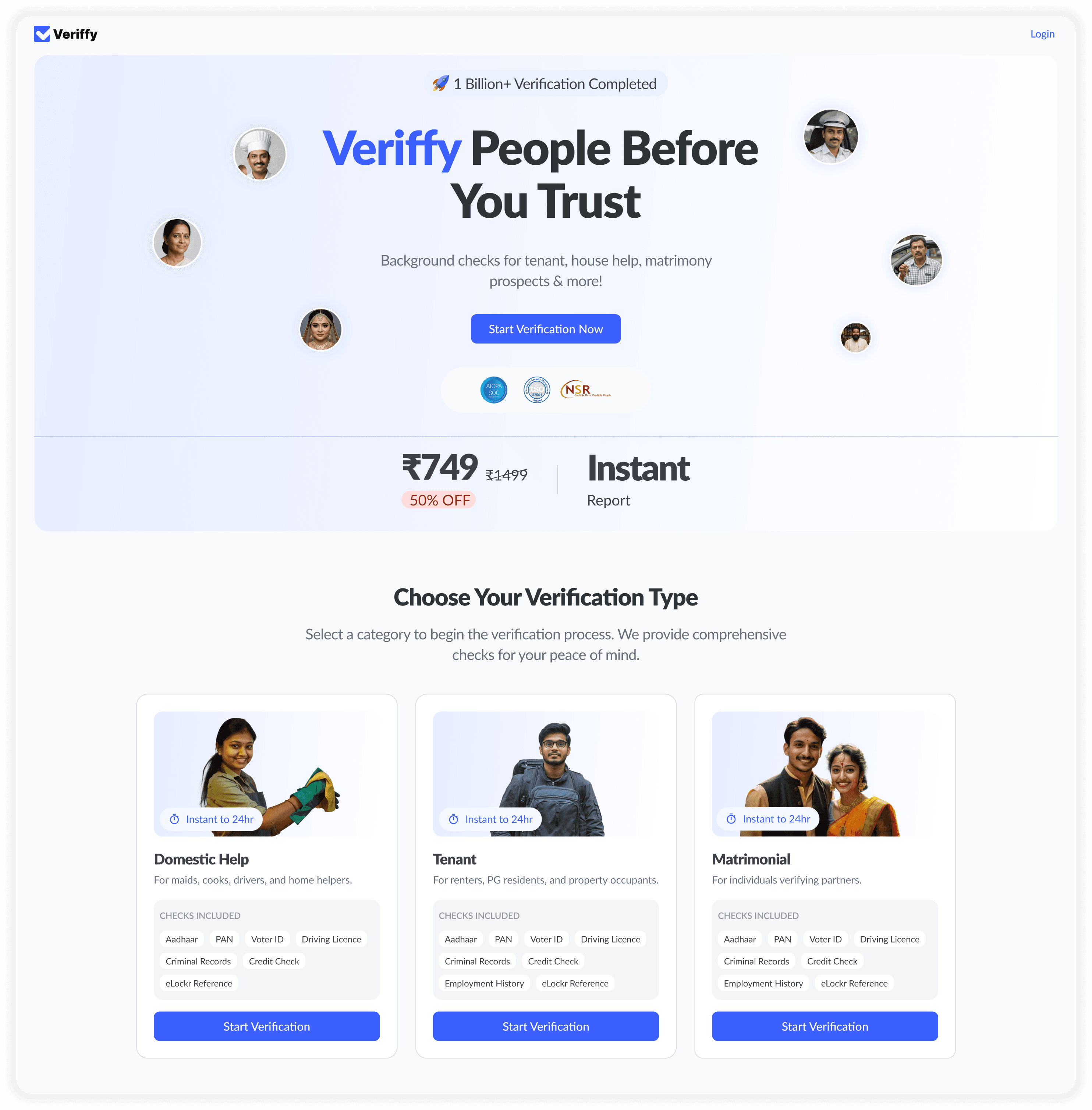
Reframing the entry point
Instead of "Run a background check" which triggers guilt, the hero framing became "People Before You Trust." Three trust signals appear before the user even considers acting: transparent pricing,
"1B+ verifications" social proof, and "Instant to 24hr" delivery clarity. The goal was to remove hesitation before the first click, not after.
Smart input with OCR assist and Smart fetch
Uploading an ID triggers automatic OCR (Optical Character Extraction). Name, DOB and ID details fill the form. Fields are clearly marked as OCR filled and can be edited.
Smart fetch: With user consent, Smart Fetch brings in extra details linked to the mobile number using APIs. This reduces effort and builds trust because users can see what was extracted and what was fetched.
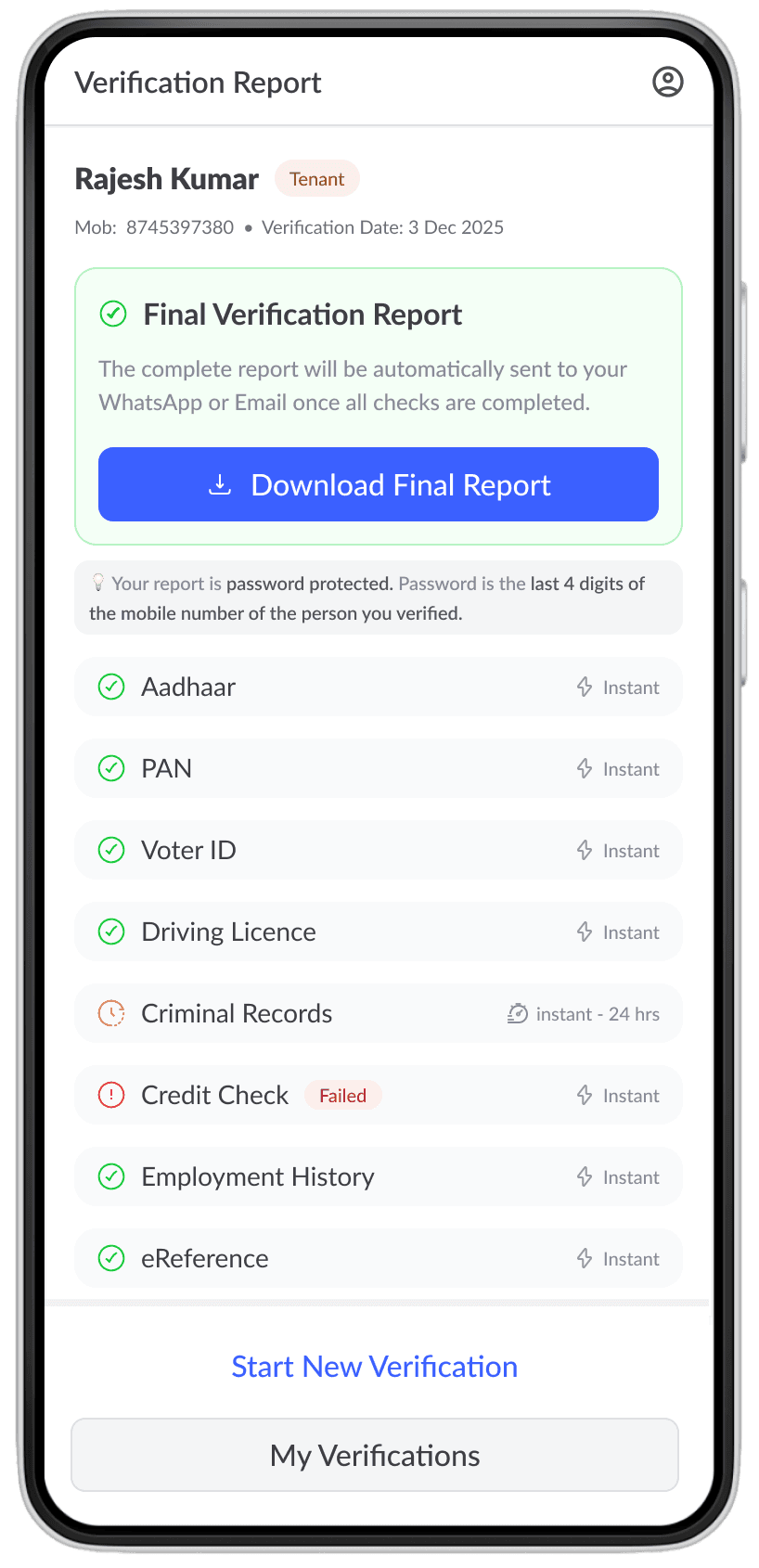
Live progress instead of a "thank you" void
The most dangerous moment in any consumer flow is the post-payment void. We replaced the standard confirmation screen with a real-time progress tracker showing each check's status as it runs. Instant checks (Aadhaar, PAN, DL) update within seconds.
Slower checks show animated "In Progress" states. WhatsApp and email delivery is promised immediately. This eliminates the anxiety gap that drives refund requests.
Earn with referrals, withdraw anytime
Users can share their referral code and earn money on every successful referral. Each completed verification adds to their earnings.
All earnings are visible in one place and can be withdrawn instantly. No waiting, no confusion.
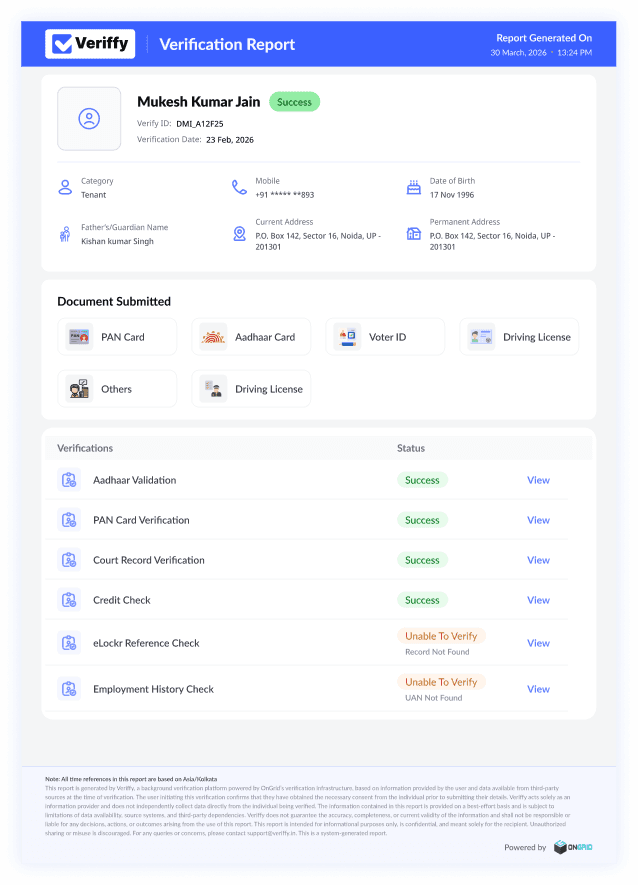
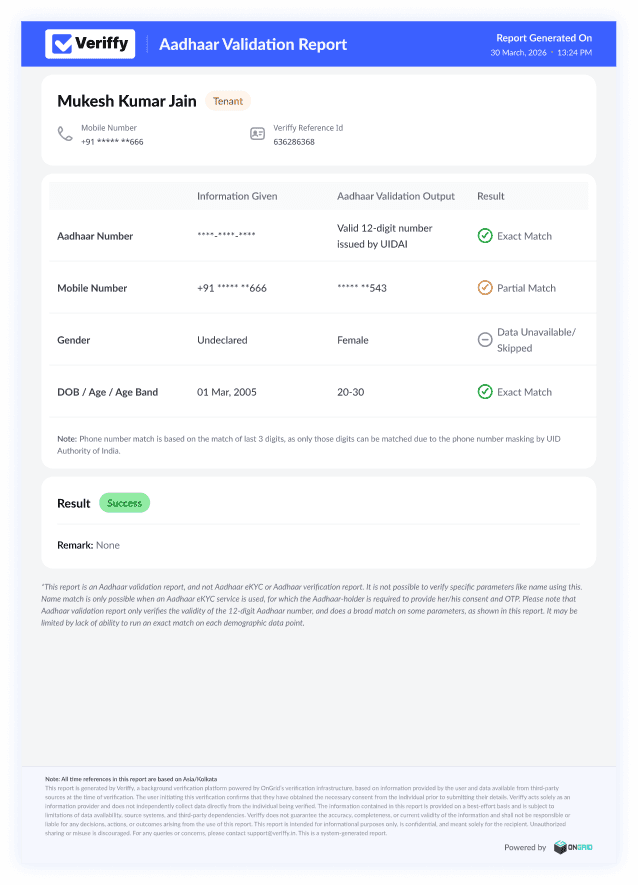
Clear, shareable reports
Users do not pay for the flow, they pay for the report. So the output had to be simple, clear and trustworthy.
Once all checks are complete, users receive a detailed PDF report on WhatsApp and email. It is also available to download inside the platform.
The report is password protected and designed in a way that anyone can understand it easily. Each check has a clear status so users can quickly make a decision or share it when needed.
System thinking: built for scale, not just screens
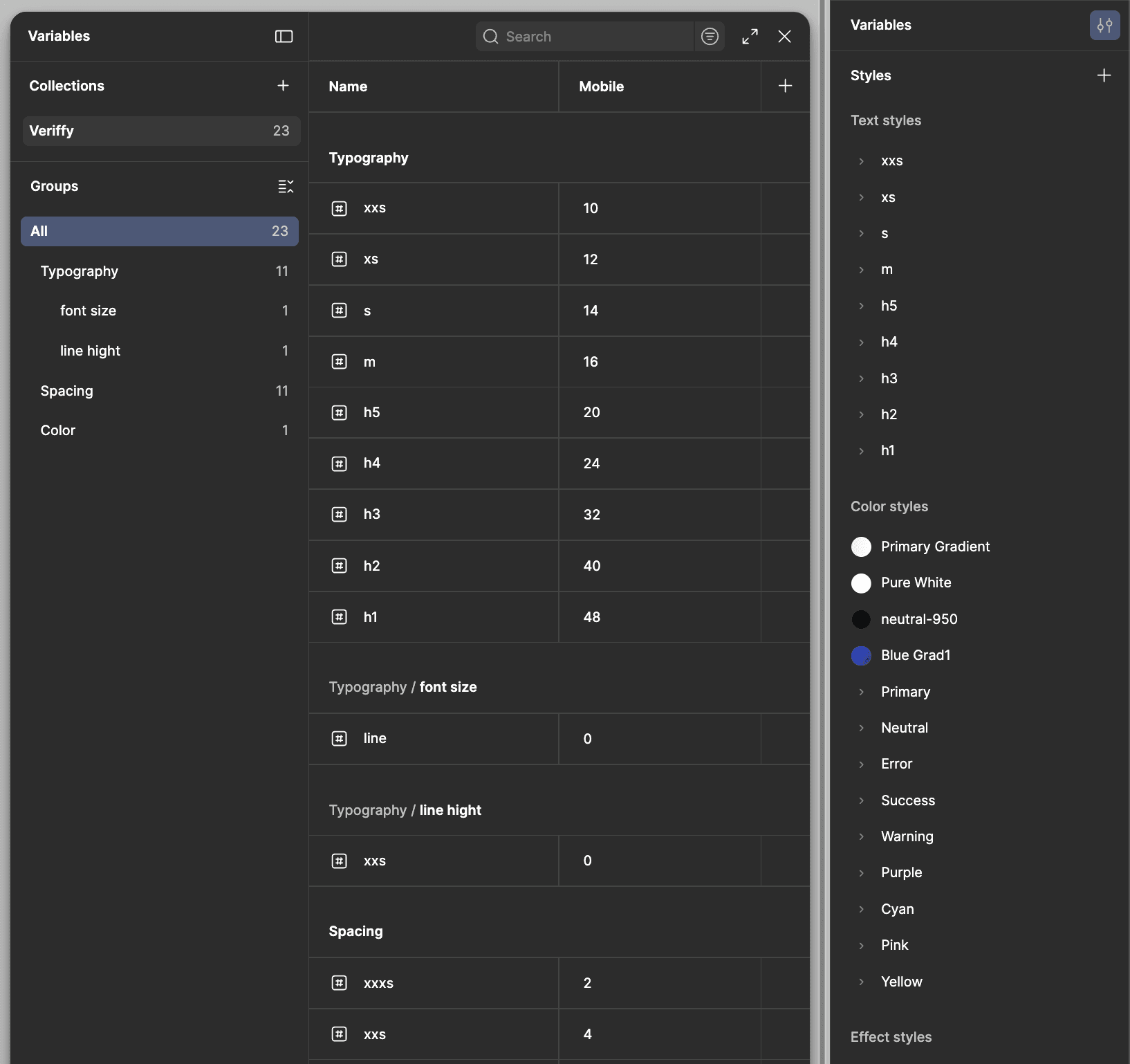
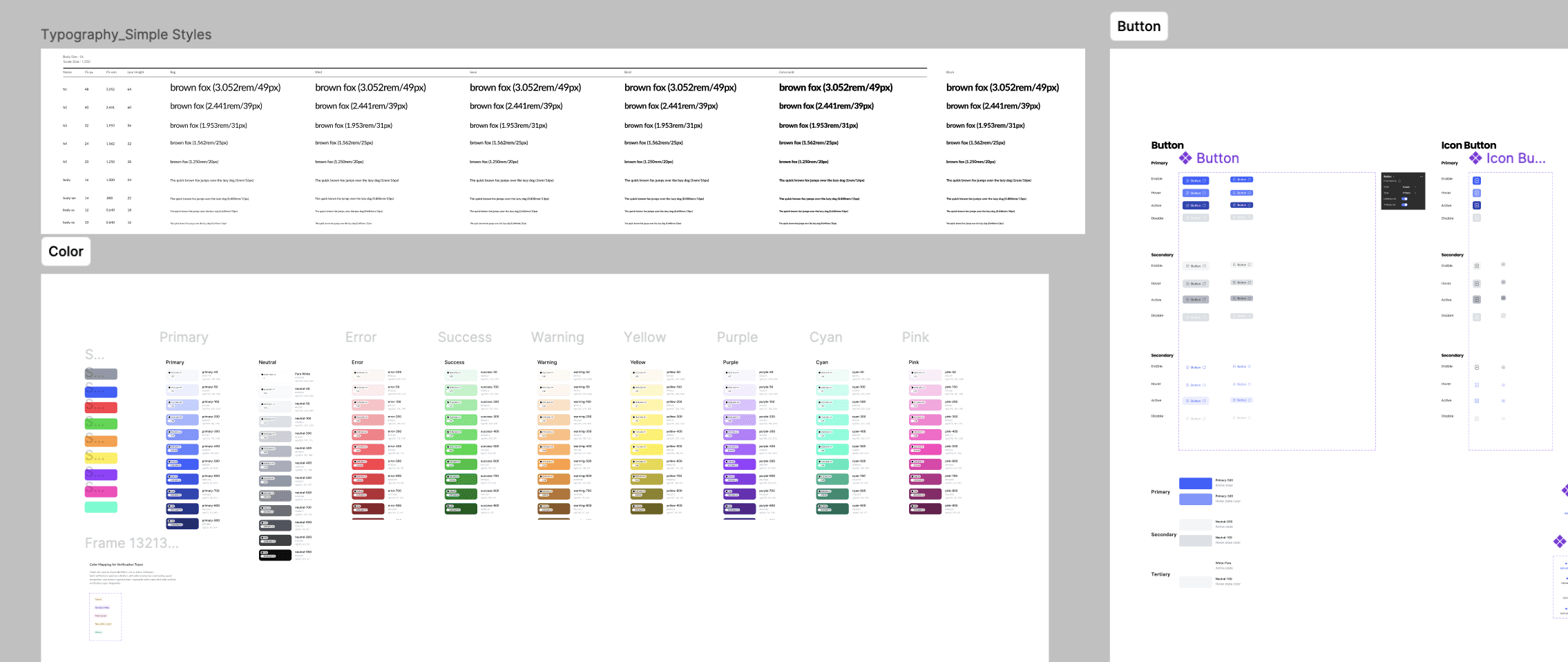
This was not a one off UI. The design system was built token first with colors, typography, spacing and component states as reusable variables.
OCR states, errors and loading patterns were standardized for dev handoff. This makes it easy to add new verification categories without redesigning the flow.
Qualitative signal from usability testing:
From usability testing, users started describing verification as “the responsible thing to do”. Earlier, the same act felt “intrusive” and “corporate”.
This showed the shift worked not just in the flow, but in how people perceived it.
Impact (MVP Phase)
This is an MVP launched recently, so we are currently tracking user behavior, feedback and reviews to understand real world usage.
Early signals show higher completion across the flow, especially at consent and payment steps where users usually hesitate.
Users were able to complete the journey without external help, which was critical for a first time use case.
We are now tracking real usage data to validate and improve further.
What I Would Improve Next
We are currently in the MVP stage, so the focus now is on learning from real users.
Next steps include improving clarity around certain checks, refining consent communication further, and optimizing the flow based on drop-off data.
We also plan to explore ways to make the report more actionable and easier to interpret for first time users.